Executive Summary: The Backbone of Modern Australian Cattle Management
In the vast and demanding landscape of Australian livestock production, cattle yard panels form the critical infrastructure that ensures animal welfare, operational efficiency, and handler safety. From the expansive stations of the Outback to the intensive feedlots of New South Wales and Queensland, the right yard design and panel selection directly impact productivity and profitability. Wiremeshworld, as a leading international supplier to the Australian agricultural sector, provides engineered cattle yard panels and systems built to withstand the harsh Australian environment while meeting the highest standards of durability and functionality. This comprehensive guide explores the types, applications, design principles, and technical specifications of premium cattle yard panels for the Australian market.
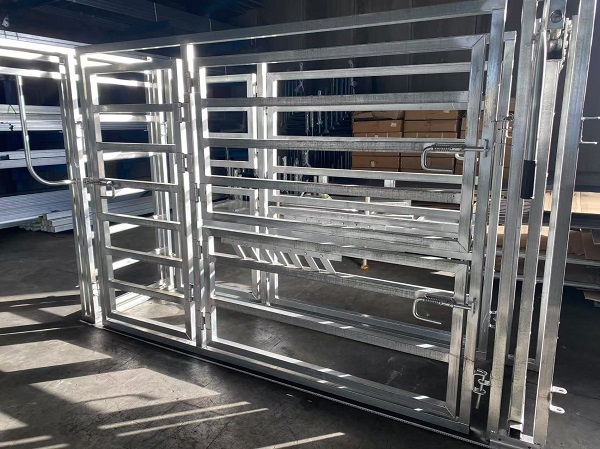
The Critical Role of Cattle Yard Panels in Australian Agriculture
Cattle yard panels are specialized fencing components designed for the unique pressures of handling livestock. Unlike standard farm fencing, they are built for:
High Impact Resistance: Withstanding the force of large animals crowding and pushing.
Maximum Safety: Protecting both cattle and handlers during mustering, drafting, vet procedures, and loading.
Operational Flexibility: Facilitating efficient animal movement through races, forcing pens, and holding areas.
Long-Term Durability: Resisting corrosion, UV degradation, and physical wear in Australia's extreme climate.
For Australian producers, investing in high-quality cattle yard panels is not an expense but a strategic investment in smoother operations, reduced animal stress, and lower long-term maintenance costs.
Types of Cattle Yard Panels and Their Specific Applications
Wiremeshworld exports a range of panel types, each serving a distinct purpose within the cattle handling system.
1. Standard Forced & Holding Yard Panels
These are the primary panels used to construct the main holding pens and forcing yards.
Typical Dimensions: 2.4m to 3.0m long, 1.5m to 1.8m high.
Construction: Heavy-duty tubular steel frames (typically 50mm x 50mm or 60mm x 60mm) infilled with either:
High-Tensile Wire Mesh: 8-10 horizontal wires with vertical spacing to prevent hoof entrapment.
Solid Sheet (Kick Plate): Often on the lower third to prevent animals seeing out and staying calmer, with mesh above for ventilation and visibility.
Best For: General holding yards, larger paddock-style pens.
2. Race Panels and Siding
Used to construct the narrow race (lane) that guides cattle single-file to the crush (cattle squeeze).
Key Feature: Extra height (often 1.8m-2.1m) and a solid siding facing the race to create a "visual barrier." This prevents animals from seeing distractions and keeps them moving forward.
Construction: Extremely robust, often with solid steel sheet from bottom to top on the race side, and a heavy-duty frame.
3. Drafting Gates (Sliding or Swing)
The pivotal gates used to sort (draft) cattle into different pens based on sex, weight, or health status.
4. Crowd Gates (Master Gates)
A large, angled gate at the rear of the forcing pen that gently pushes cattle forward into the race.
Design: Typically a V-shaped or curved panel that pivots or slides, operated by a lever or hydraulic ram.
Purpose: To apply gradual, steady pressure to move the mob without causing panic or backtracking.
5. Portable/Modular Panels
Lightweight but strong panels that can be easily connected and relocated.
Best For: Temporary yards, pasture rotation systems, hobby farms, or as supplementary pens.
Wiremeshworld Spec: Made from galvanized tube and mesh, with quick-connect pins or clips for fast setup.
Table 1: Cattle Yard Panel Selection Guide for Australian Producers
| Panel Type | Primary Function | Key Features | Ideal For |
| Heavy-Duty Holding Panel | Forming main pens & forcing yards | Tubular frame, mesh or kick-plate infill, galvanized | Large stations, feedlot holding areas |
| Race Siding | Lining the single-file race | Extra height (1.8m+), solid visual barrier on inside | All yards with a fixed race system |
| Drafting Gate | Sorting animals into different pens | Smooth sliding/swing action, robust hinges/latches | Any yard requiring frequent sorting |
| Crowd Gate (Master) | Gently moving cattle from forcing pen to race | Angled design, easy leverage or hydraulic operation | Medium to large yards for efficient cattle flow |
| Portable Panel | Temporary or flexible yarding | Lightweight, easy connections, galvanized | Hobby farms, rotational grazing, supplementary yards |
Design Principles for an Efficient Australian Cattle Yard
The effectiveness of cattle yard panels depends on their integration into a well-designed system. Key principles include:
The Flow-Through Design: Cattle should move naturally in a circular or curved flow from the entrance, through holding pens, into the forcing pen, down the race, to the crush, and out to a recovery pen. Straight lines and dead ends cause hesitation and stress.
Solid Siding Philosophy: Using solid panels or kick-plates in races and on the lower part of forcing pens prevents cattle from seeing activity outside the yard, keeping them calmer and easier to handle.
Correct Angles: Forcing pens should be funnel-shaped (approx. 30-degree angle on the crowd gate side) to guide cattle toward the race entrance without them realizing they are being confined.
Non-Slip Flooring: While not a panel function, the yard surface (concrete, compacted gravel) is crucial for animal and handler safety. It should be level and provide good traction.
Technical Insights: Materials, Coatings, and Construction
The longevity of cattle yard panels in Australia is dictated by their build quality.
Material Specifications:
Frame: Minimum 3mm wall thickness rectangular hollow section (RHS) or circular hollow section (CHS) steel. Grade C350 (350 MPa yield strength) or higher is standard for structural integrity.
Mesh Infill: High-tensile, galvanized steel wire (minimum 4mm thickness) welded to the frame at every intersection for maximum strength.
Kick Plates: Often made from BMT (Blue Metal Tier) or similar galvanized steel sheet, 1.6mm-2.0mm thick.
Corrosion Protection for Harsh Australian Conditions:
Hot-Dip Galvanizing to AS/NZS 4680: This is non-negotiable for the Australian market. The entire fabricated panel is immersed in molten zinc, coating all surfaces—inside tubes, welds, and edges—providing a sacrificial layer that fights rust for 20+ years, even in coastal or high-ammonia (urine) environments.
Powder Coating (Optional): An additional layer over galvanizing, usually in a dark green or black agricultural finish. This adds extra UV protection and improves aesthetics without compromising the underlying zinc protection.
Engineering for Strength:
Welding: Continuous, full-penetration welds at all critical joints. Wiremeshworld uses robotic welding for consistency, ensuring each panel can withstand tonnes of pressure.
Bracing: Diagonal braces or reinforced post connections are essential for panels over 2.4m long to prevent racking or bending.
Why Source Cattle Yard Panels from Wiremeshworld for Australia?
Wiremeshworld is a strategic partner for Australian distributors, large-scale producers, and feedlots because we understand the local requirements:
Compliance with Australian Standards: Our panels are engineered to meet relevant structural and safety standards for agricultural equipment.
Climate-Adapted Manufacturing: We specify materials and coatings (hot-dip galvanizing) proven to perform under Australian sun, dust, rain, and coastal salinity.
Export-Ready Packaging: Panels are bundled, strapped, and packed on timber skids (compliant with ISPM 15 for international shipping) to ensure they arrive at Australian ports (Melbourne, Brisbane, Fremantle, Sydney) in perfect condition.
Modular & Scalable Systems: We supply everything from individual replacement panels to complete, pre-designed yard kits, complete with all necessary posts, gates, hinges, and latches.
Technical Support: We provide detailed CAD layouts and handling system advice to ensure our products integrate seamlessly into your operation.
Applications Across the Australian Livestock Sector
Broadacre Cattle Stations: Large, permanent yards in the Outback for mustering and processing.
Feedlots: High-throughput systems requiring incredibly robust and low-maintenance panels for constant use.
Dairy Farms: Yards for herd health checks, AI programs, and calf management.
Backgrounding & Finishing Properties: Yards for receiving, sorting, and treating cattle.
Sale Yards & Transport Depots: Heavy-duty panels designed for the movement of large numbers of unfamiliar animals.
Hobby & Breeding Farms: Smaller, modular systems for manageable herd sizes.
Frequently Asked Questions (FAQ)
Q1: What is the ideal height for cattle yard panels?
A: For most Bos taurus (European breed) cattle, a height of 1.6m (5'3") is standard for holding pens. Races and areas where animals may jump require 1.8m (6ft). For Brahman or other larger breeds, 1.8m is recommended throughout. Wiremeshworld can manufacture to any custom height required.
Q2: How do I prevent rust on my cattle yards, especially near coast or in feedlots?
A: The only effective long-term solution is to start with hot-dip galvanized steel. This process bonds zinc to the steel at a molecular level. Powder coating over the top adds another layer of protection. Avoid painted-only panels, as scratches will lead to rapid rust spread.
Q3: What is the benefit of a "kick plate" or solid lower panel?
A: A solid lower section (approx. 600mm high) prevents cattle from seeing legs and movement outside the pen, which has a significant calming effect. It also protects the mesh from damage caused by animals kicking through the fence.
Q4: Can I design and build a yard myself using modular panels?
A: Yes. Many producers use a combination of standard panels, gates, and race siding to create a functional yard. Wiremeshworld supplies comprehensive kits with instructions. However, for large or high-throughput systems, consulting with a livestock handling designer is recommended to optimize flow and safety.
Q5: What should I look for in a good drafting gate?
A: Look for a gate that operates smoothly with minimal effort—well-balanced with quality bearings on a sliding gate or heavy-duty, adjustable hinges on a swing gate. The latching mechanism should be positive and easy to use from either side. Wiremeshworld gates feature reinforced frames and premium hardware.
Q6: Does Wiremeshworld supply the complete yard hardware?
A: Yes. We are a full-solution supplier. We export not only the cattle yard panels but also all associated posts (star pickets, heavy-duty RP posts), hinges, latches, gate wheels, and specialized hardware needed for a complete installation.
Conclusion: Building a Foundation for Efficiency and Safety
Superior cattle yard panels are the cornerstone of a modern, low-stress, and efficient livestock operation in Australia. The choice of supplier directly affects the system's durability, functionality, and total cost of ownership over decades.
Wiremeshworld combines international manufacturing expertise with a deep understanding of Australian agricultural needs. We don't just sell panels; we provide engineered livestock handling solutions built from the highest quality materials, protected for the long term, and delivered to support the success of Australian farmers and producers.
Invest in the infrastructure that works as hard as you do. Contact Wiremeshworld today to discuss your cattle yard panel requirements, request technical drawings, or get a quote for a system tailored to your Australian property.

